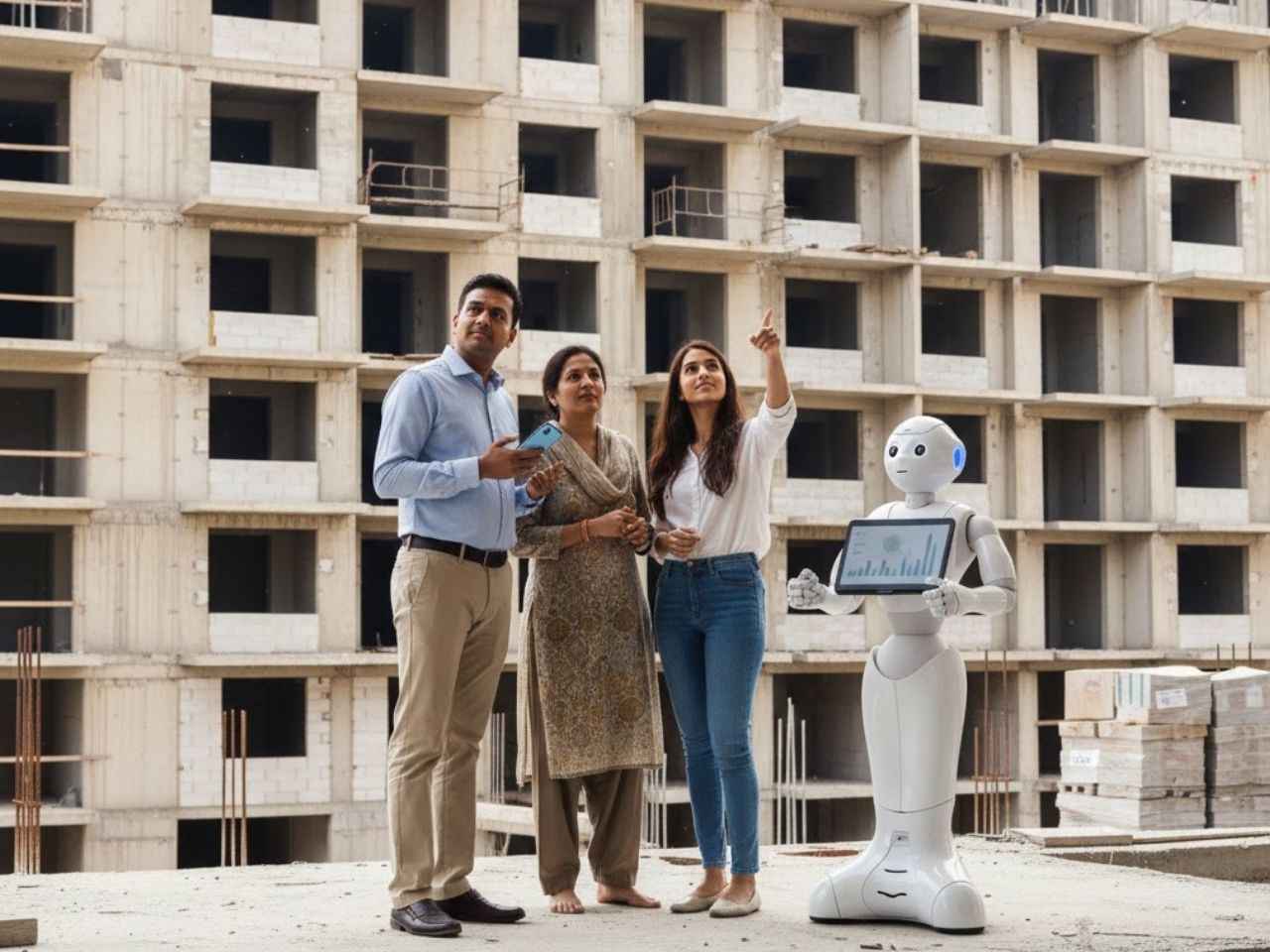
And Why the Final Decision Is Still Human
Buying a home has never been a single decision.
It is a series of questions, comparisons, calculations, and personal discussions that unfold over weeks or even months.
Now, artificial intelligence has become part of this journey. Not as a replacement for human judgment, but as a tool that helps buyers organise information, test assumptions, and reduce uncertainty.
Today’s homebuyers use AI at multiple stages of decision-making, sometimes consciously, sometimes in the background, from shortlisting locations to estimating EMIs and comparing long-term value.
Yet one truth remains unchanged.
AI helps people narrow choices. It does not help them commit.
The biggest challenge today is not lack of information.
It is information overload.
Homebuyers are exposed to:
This is where AI quietly steps in.
Buyers rely on AI-powered tools for:
This stage answers one key question:
“Which 3–5 options are even worth my time?”
AI does this efficiently. Humans cannot.
Once options are shortlisted, buyers start validating decisions.
This is where AI becomes more visible, and more conversational.
Buyers often use AI-powered EMI calculators to test different scenarios and repayment comfort, reflecting the importance of disciplined planning discussed in Avoid Defaulting on Your Home Loan.
At this point, AI functions like a financial sanity checker.
It helps buyers understand:
But there is a clear limit.
AI can explain numbers.
It cannot explain how living with that EMI will feel.
This is often the point where uncertainty sets in.
Once buyers have:
They still hesitate.
Why?
Because real estate decisions are emotional commitments disguised as financial ones.
AI can summarise reviews.
It cannot interpret credibility.
This is where buyers start seeking:
This shift is often most evident when buyers begin evaluating residential projects across Chennai, where physical site visits reveal aspects of livability and long-term comfort that digital tools cannot fully capture.
After all the tools, simulations, and comparisons, the final decision usually hinges on three human factors.
Buyers choose projects where:
Trust cannot be automated.
Projects that explain:
Convert better than projects that only “sell benefits”.
This is where experienced developers stand apart.
A home must feel right:
No AI model can measure peace of mind.
This clarity becomes especially important when signing agreements, a stage where details and commitments matter most. For a deeper understanding, see 5 Important Points Before Signing Sale & Construction Agreement.
Artificial intelligence is changing how people evaluate homes, but it is not changing why they buy them.
AI works best in the early and middle stages of the home-buying journey. It helps buyers cut through noise, organise information, and approach decisions with more clarity than ever before. Shortlisting locations, comparing prices, testing EMI scenarios, and understanding affordability have all become faster and more structured because of AI-driven tools.
This shift has led buyers to enter discussions better informed and more prepared.
However, clarity is not the same as conviction.
While AI can narrow choices and validate numbers, it cannot answer the questions that truly determine a purchase. It cannot assess construction quality on the ground, interpret a builder’s intent, or predict how a home will feel after years of everyday living. Those answers only come from experience, observation, and honest conversations.
Many of these doubts are also shaped by common misconceptions, which are addressed in Home Buying Myths Busted: What Every Buyer Needs to Know.
For instance, if someone is looking for flats in Madhavaram, a site visit often reveals far more about livability and future potential than any online data point.
This is why the final decision should always be taken after:
The smartest homebuyers in 2026 are not those who rely entirely on technology, nor those who ignore it. They are the ones who use AI to become better informed, and human judgment to become more confident.
When data clarity, financial comfort, and builder trust come together, decisions feel calmer, more considered, and far more sustainable in the long run.
That balance, more than any tool or trend, is what leads to a good home purchase.
AI has become a useful part of the home-buying journey. It helps buyers research faster, compare options more clearly, and enter discussions better prepared than before.
But the way homes are finally chosen has not changed.
Even in 2026, buyers still need to walk the site, understand the surroundings, experience the layout, and see how a project is actually taking shape. No tool can replace the confidence that comes from being physically present and asking questions face to face.
Technology may guide the search, but certainty is built on the ground.
For homebuyers, the smartest approach today is not choosing between AI and traditional methods, but using both together. Use AI to research better. Use site visits and real conversations to decide better.
AI helps homebuyers shortlist locations, compare prices, calculate EMIs, and analyse options more efficiently during the early stages of decision-making.
AI can suggest suitable locations based on budget, commute, and preferences, but on-ground factors are best understood through physical site visits.
AI uses historical data and trends to estimate prices, but it cannot fully predict future market changes or local developments.
AI is useful for research and planning, but final decisions should always involve site visits, document checks, and personal evaluation.
No. AI supports research, but site visits and human judgment remain essential for choosing the right home.


 Link Copied!