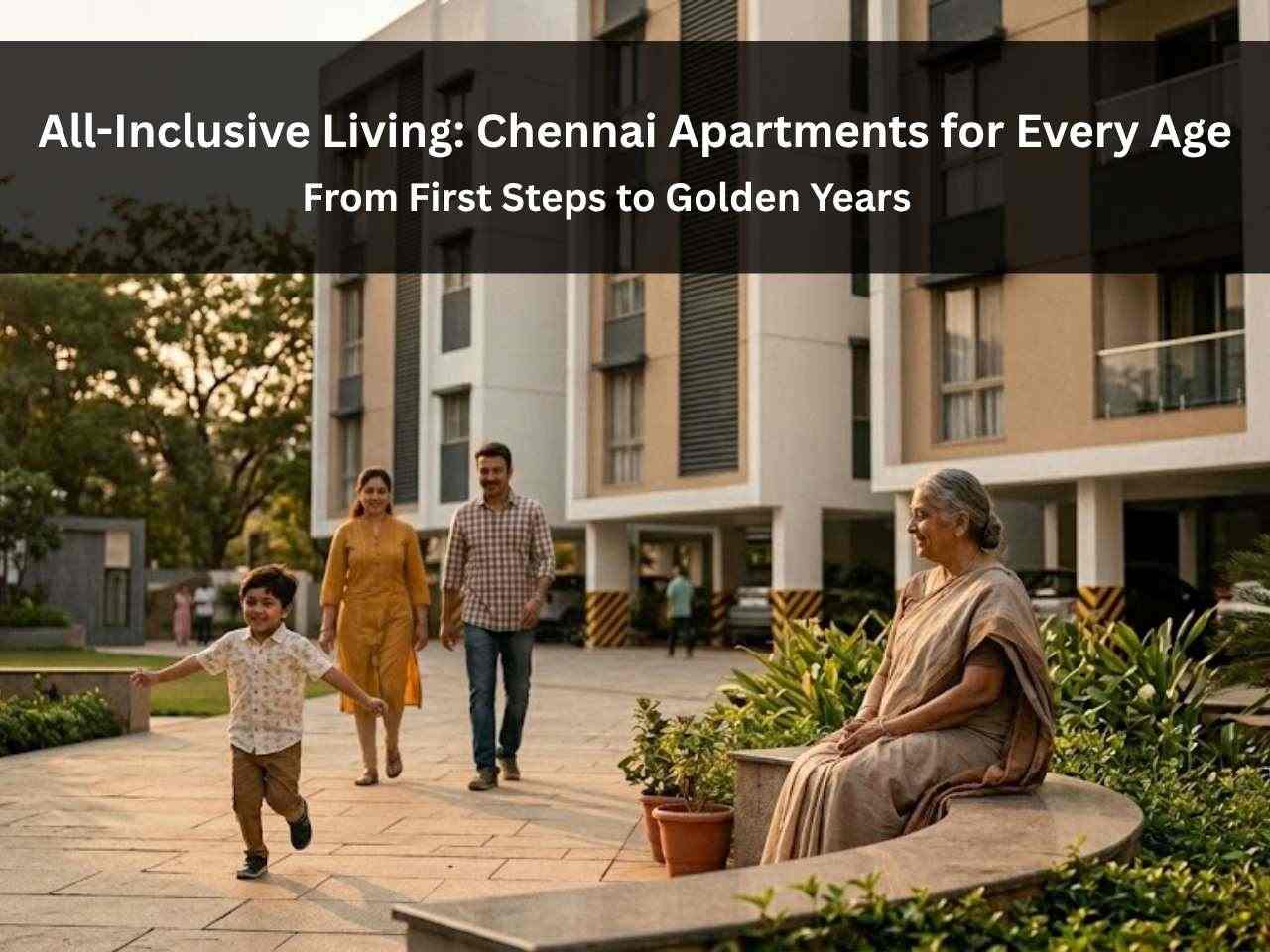
Somewhere along the way, the conversation around buying a home changed.
It used to begin and end with location, budget, and square footage. Those things still matter, of course. But today's homebuyers are bringing a different set of questions to the table.
These are not niche concerns. They reflect a fundamental shift in how people think about the homes they choose to live in. The expectation today is not just a well-built apartment in a good area. It is a community designed to support real life, in all its complexity.
That is the idea at the heart of all-inclusive living, and it is reshaping how thoughtful developers approach residential design.
For decades, residential design operated on a relatively narrow brief. Build a well-proportioned apartment, add some basic amenities, and let buyers figure out the rest.
The problem is that the people living in these homes were never quite as uniform as the design assumed.
Consider a typical Chennai household. You may have grandparents managing mobility challenges, school-going children who need space to move, working professionals who need quiet and function, and in a growing number of homes, a pet that is very much part of the family. Each of these individuals experiences the shared space differently. What works well for one can quietly frustrate another.
The shift in buyer mindset has been gradual but significant. People exploring flats in Chennai for sale today are not just evaluating a unit. They are evaluating an ecosystem, and asking whether that ecosystem genuinely accommodates everyone who will live within it.
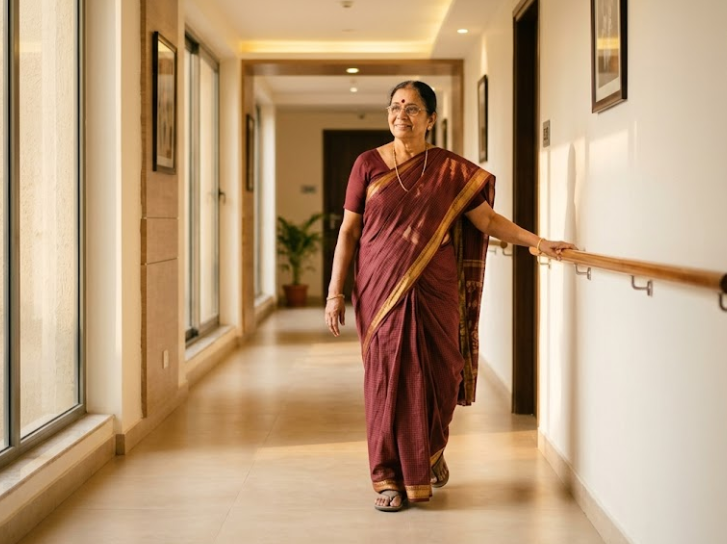
An image of a senior-friendly corridor designed for safe and independent movement in a modern apartment in Chennai.
India's senior population is growing at a pace that demands attention. By 2031, the country is projected to have over 194 million people above the age of 60. In most Chennai households, that number is not an abstraction. It is a parent or in-law currently living with you, or expected to in the near future.
Designing well for seniors does not require dramatic intervention. It requires early, deliberate thought.
The features that make a meaningful difference are often subtle but consistent across well-designed communities:
When these elements are planned from the start, they blend naturally into the design. When added later, they tend to feel provisional at best.
There is also a dimension to senior-friendly design that goes beyond the functional. When an older person can move through their home and community with ease and without depending on others for everyday tasks, that is not a small thing. It speaks directly to their sense of independence and dignity. Good design can protect that in ways that are quiet but profound.

Children playing freely in the open green spaces of a gated community in Chennai.
It has become something of a cliché in residential marketing, the cheerful play area near the entrance, designed more for the site visit than for actual use.
What children genuinely need from a residential community is more considered than that. The elements that make a real difference include:
The advantages of buying a home in a gated community become most visible here. Children get something increasingly rare in urban environments — the freedom to move independently within a safe, familiar boundary. The developmental benefits of outdoor play are well documented. The peace of mind for parents is equally real, even if less frequently cited.
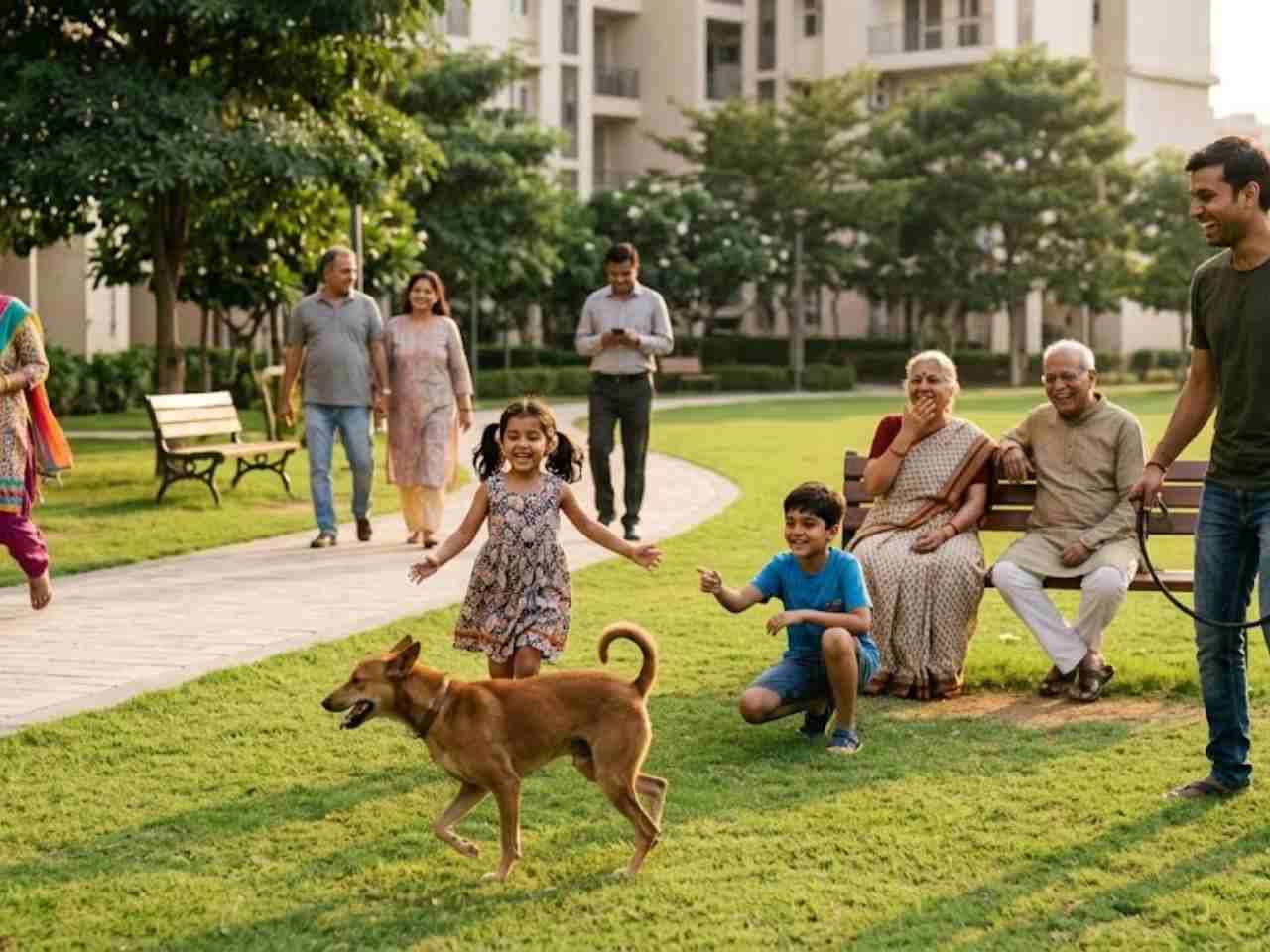
A pet-friendly community where thoughtfully designed spaces ensure both residents and their pets feel equally welcome and at ease
This is a factor that the residential sector in India has been slow to take seriously, despite the evidence pointing clearly in one direction. Pet ownership in urban India has grown considerably, and for a meaningful segment of homebuyers, a community's attitude toward pets is not a secondary consideration. It can be a deciding factor.
The requirements are not extensive, but they matter:
Communities that get this right tend to earn a specific kind of loyalty. Residents who feel their entire household is genuinely welcome are more invested in where they live. That investment shows.
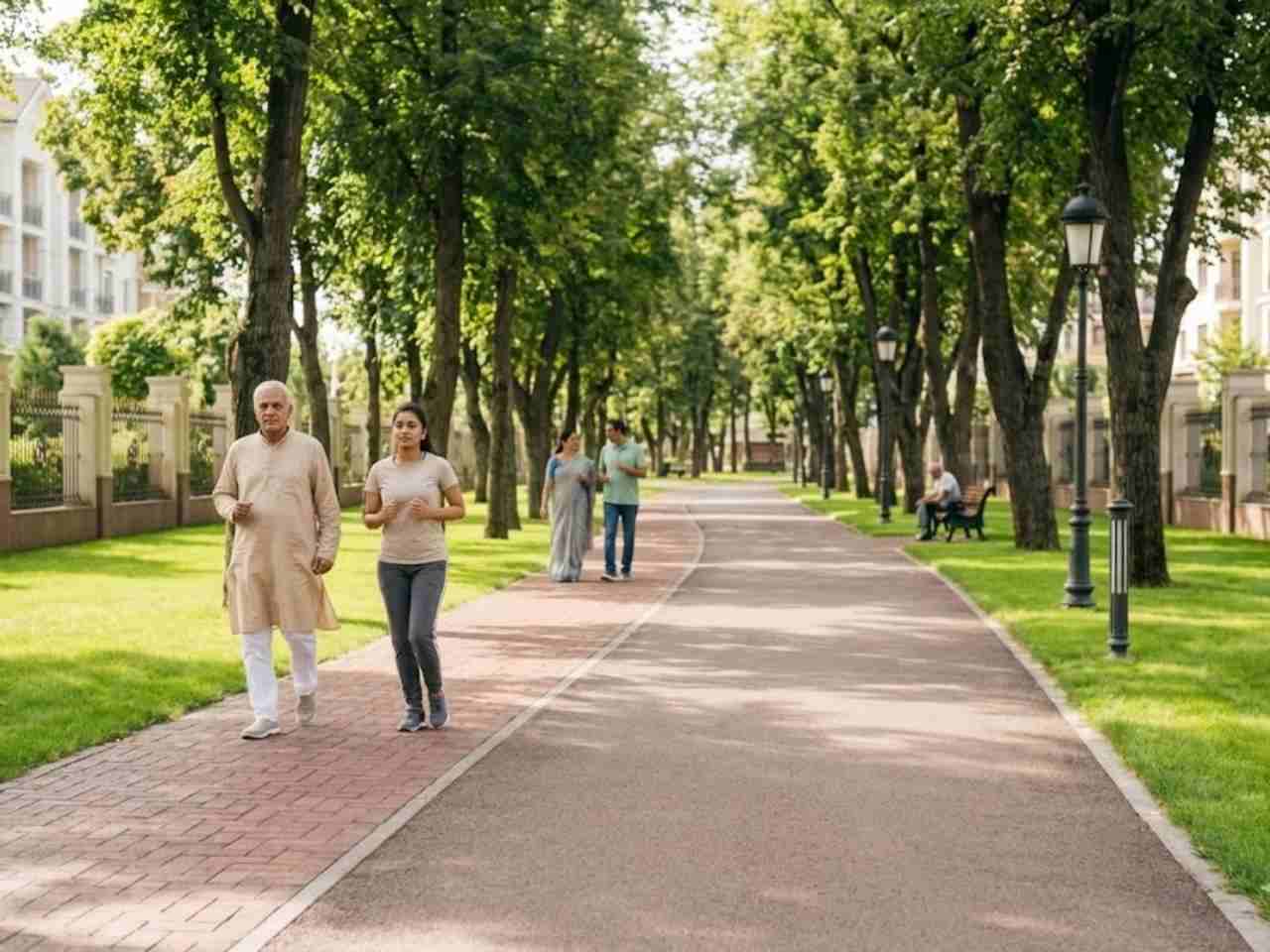
A thoughtfully designed walking track that supports everyday routines and adds real value to daily life in modern communities
The residential sector has developed a complicated relationship with amenities over the years. The race to offer the most impressive list has occasionally produced features that photograph beautifully but serve very few people in practice.
The amenities that genuinely improve quality of life are less spectacular and far more consistent in their value:
These are the features that residents notice not on the day they move in, but on an ordinary Wednesday six months later. To know more about what discerning buyers are now prioritising, read our breakdown of what Chennai homebuyers expect from top residential projects today.
Universal design, as a principle, is straightforward: spaces should work for people across a range of ages, abilities, and life stages without requiring significant modification as circumstances change.
In practice, this means building with the full diversity of residents in mind from day one:
The economic logic is clear. Inclusive features built into the original design cost a fraction of what retrofitting demands, and the outcome is almost always better. A ramp designed as part of the architecture reads as intentional. One added five years later rarely does.
More broadly, universal design reflects a particular kind of maturity in the developer's thinking - and increasingly, it is also what makes a home genuinely affordable in the long run, without compromising on quality. It signals that the project was designed for the people who will live there, not simply for the transaction that precedes that.
Chennai has always had a long-term orientation toward homeownership. Most buyers here are not acquiring apartments in Chennai as short-term investments or transitional housing. They are choosing a place to build a life, often across multiple generations living in close proximity.
That context makes the all-inclusive question more relevant here than in many other markets:
Buying a future-ready home in this city means looking beyond what works today and asking what will hold up across the years and the changes that inevitably come with them. It is this understanding that shapes how developers like DRA Homes approach residential properties in Navalur, as well as communities in East Tambaram and Madhavaram, with the full arc of family life in mind rather than just the day of possession.
At its core, all-inclusive living is not about adding more features. It is about making better decisions at the design stage, decisions that recognise how people actually live, not how they are expected to live.
A home that works equally well for a child, a working adult, an ageing parent, and even a pet is not an overachievement. It is what thoughtful housing should look like today. When spaces are designed with this level of intent, they do more than function well. They reduce friction, support independence, and quietly improve everyday life in ways that residents feel but rarely need to articulate.
For homebuyers in Chennai, this is not a passing trend. It is a practical lens through which to evaluate long-term value. Because the true measure of a home is not how it feels on the day you move in, but how well it continues to support you as life evolves.
The question, then, is simple. Not just “Is this a good home for today?” but “Will this still feel right years from now?”
The right answer is rarely accidental. It is designed.


 Link Copied!