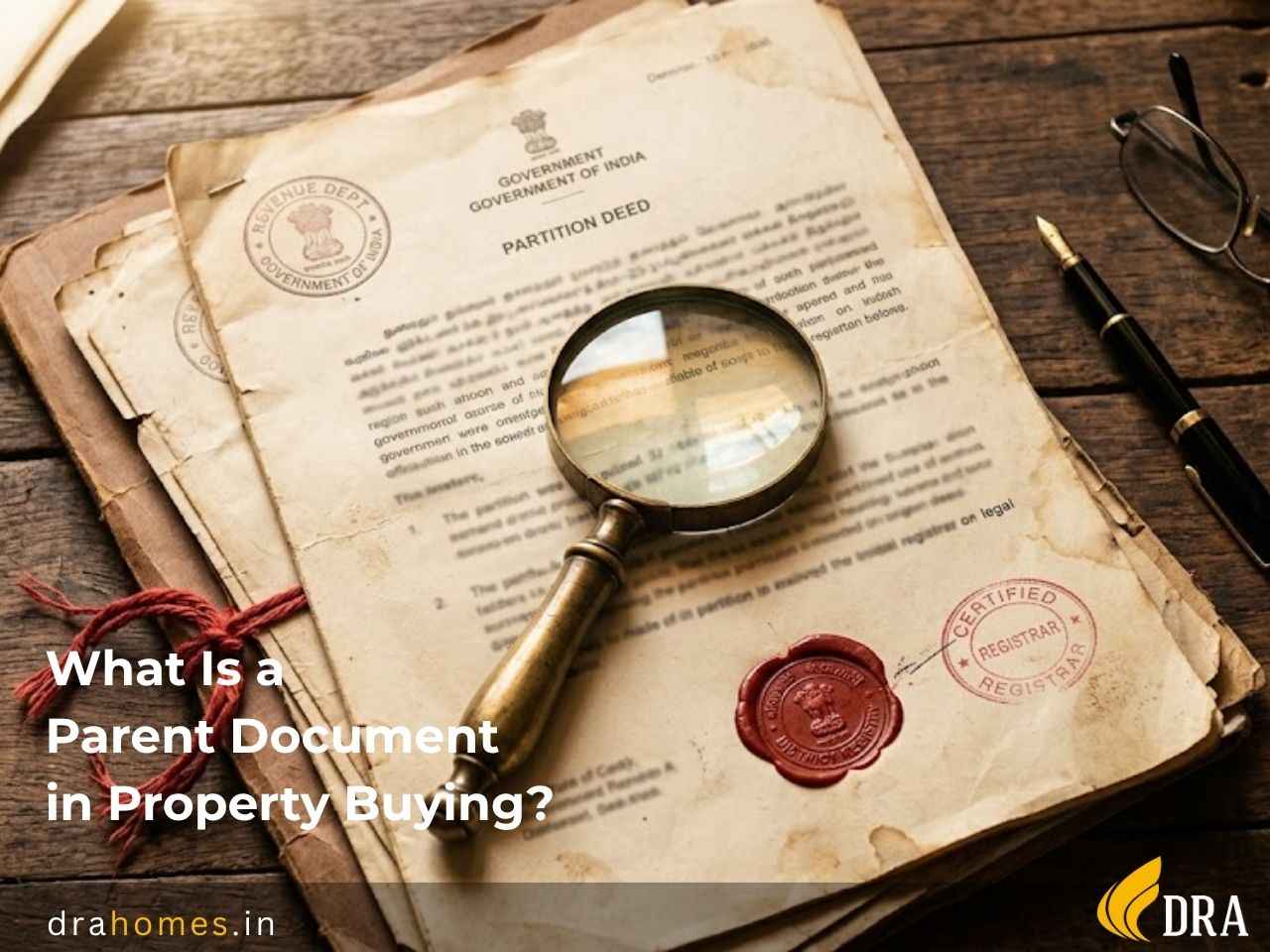
If you're buying a home or plot in Chennai, you'll hear the term "parent document" a lot, especially from lawyers, bankers, and property consultants. It sounds technical, but the idea behind it is actually quite simple
A parent document is the very first legal record that shows how a piece of land came into existence as a separate, identifiable property. Think of it as the property's birth certificate. Every sale, gift, or transfer that happens after that traces back to this one original document.
For example, imagine a large piece of agricultural land in Sriperumbudur gets divided into 10 individual plots by the original owner. The document that records this division, called a partition deed or a settlement deed, becomes the parent document for all 10 plots. Every future sale of any of those plots will refer back to this same document to prove where the land came from.
When you buy a property, your lawyer doesn't just check the most recent sale deed. They trace the ownership history backward, ideally for 30 years, all the way to the parent document. This is called a title chain or chain of title.
Here's why this matters: if there's a gap or an error anywhere in that chain, it can create legal trouble later. Say a property changed hands five times over 40 years. If even one of those transfers was done without proper documentation, it can put a cloud over the entire ownership, even if you're buying it today with all the "recent" paperwork looking fine.
Verifying documents isn't only about the parent document either. If the project is RERA-registered, you can cross-check ownership and approval details directly through the state RERA portal before you sign anything.
Let's say you're looking at an apartment in Madhavaram. Before the apartment complex was developed, the underlying land may have been owned by an individual, family, or multiple co-owners. Over time, the land may have gone through different legal transfers before reaching the developer.
For example, the ownership history could involve:
In such a case, an earlier document in the title chain may serve as the parent document for the property. Your lawyer will review this document along with the subsequent title documents to verify that the ownership has been transferred properly at each stage and that there is a clear chain of title leading to the current property.
This is also why it helps to go through the important points to check before signing your sale and construction agreement, since document verification and agreement clauses usually go hand in hand.
This is a common worry for buyers, especially with older properties. If the parent document is lost or unavailable, it doesn't automatically mean the property is problematic. Lawyers can often reconstruct the ownership history using:
You can request certified copies of most of these directly through the Tamil Nadu Registration Department's online portal, which is usually the fastest starting point if a document has gone missing.
However, a missing parent document does mean extra due diligence is needed. It's always better to ask the seller or builder for it upfront rather than discovering the gap later.
Before you finalize any property, always ask for the parent document and the full chain of title. If you're buying for the first time and want the complete picture beyond just documentation, our guide on what first-time home buyers must know is a good next read. A few extra days of verification now can save you years of legal hassle later.


 Link Copied!